Work coordination platform
Designed for the automotive industry
As a leader in innovation, you understand the importance of staying ahead of the curve in the fast-moving automotive 4.0 world. KanBo provides you with the tools to do just that by facilitating smart factory operations, streamlining project management, fostering collaboration and solving complex problems.
Transforming Work Coordination in the Automotive Industry with KanBo: A Business Architect’s Guide to Streamlining Project Management and Cross-Departmental Collaboration
Introduction:
In an ever-evolving business world, large enterprises are always struggling for better work coordination and project management. The growing complexity of operations and collaboration calls for a specialized platform that could provide a good mix of tools to streamline the processes. KanBo is designed as a work coordination platform to bridge the gap between teams, departments, and external stakeholders, providing a comprehensive solution that revolutionizes modern business coordination.
Feature Benefits:
KanBo provides a wide range of features that enhance collaboration, communication, and work coordination. One of its key features is its integration of on-premises and cloud installations to cater to the business needs of all kinds of organizations. Its customizable interface ensures easy access to tasks and projects, giving stakeholders visibility into the status of work across the entire enterprise.
KanBo also provides several templates to help the project managers and teams save time by creating tasks and projects faster and more efficiently. The platform includes extensive data tracking and analytics capabilities, which enable stakeholders to make informed decisions through real-time data visualization and reporting.
Product Tour:
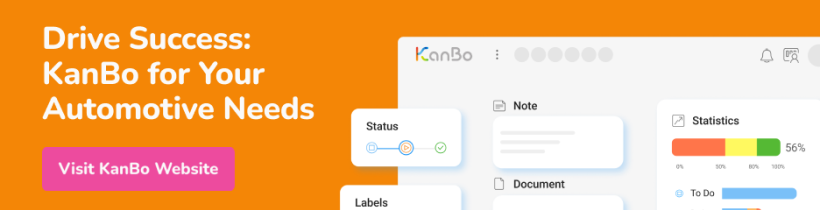
KanBo’s interface is user-friendly, and the user can easily navigate through the various features. When entering the platform, the user is greeted with a dashboard that displays the status of each project and task, making it easier to manage the workload and the team’s performance. The KanBo platform also offers the capability to organize tasks into customizable boards, providing the flexibility to organize work based on the project’s nature.
Cross Departmental Communication in Automotive:
In the case of the Automotive industry, departments of production, supply chain, HR, and marketing need to communicate and collaborate. KanBo provides a dedicated space for each department to collaborate, with a high level of security and privacy, allowing them to address their specific business needs.
KanBo’s tagging feature ensures that relevant stakeholders are notified and can follow up on their task when necessary. Furthermore, KanBo’s in-app messaging and video conferencing features enable cross-departmental communication in real-time. All stakeholders can communicate and collaborate seamlessly, regardless of their physical location.
Conclusion:
In conclusion, KanBo’s work coordination platform provides large enterprises with a comprehensive solution to simplify project management, streamline work coordination, foster collaboration, and support cross-departmental communication. With its integrated on-premises and cloud installations, customizable interface, and extensive data tracking capabilities, KanBo delivers the tools that are critical for large enterprises. If you are a large enterprise looking for a work coordination platform that can work across departments, KanBo may just be the right solution for you.
One week of life Business Architect in Automotive industry with KanBo
Monday:
As a Business Architect in the automotive industry, my primary task for the day was to set up KanBo boards for the new project we received. I created a board and divided it into appropriate lists, representing the various stages of the project. I also invited relevant team members to collaborate with me on this board.
Tuesday:
I spent the day creating cards and assigning them to team members on the KanBo board. I used KanBo’s “Assign People” feature to assign tasks to different team members and set the due dates for their completion. This feature helped to streamline our team’s workload and ensure that everyone knew exactly what they needed to do.
Wednesday:
Today, I focused on visualizing the work stages on the Kanban view in KanBo. I moved the cards through different lists, based on their stage of completion, making it easy for everyone in the team to keep track of the project’s progress. I also set up notifications for the board, which would alert all team members whenever there was a change in the board’s status or a new task assigned to them.
Thursday:
I worked on customizing the board to suit the project’s specific requirements. I used KanBo’s templates and card elements to make the board more organized and easier to navigate. I also added document groups to the board, so that all relevant documents could be stored in one place and easily accessed by everyone on the team.
Friday:
Today, I hosted a virtual meeting for the team on KanBo board to discuss the progress of the project and assign new tasks. During the meeting, we used KanBo’s chat feature and mentions to communicate and collaborate with each other, making it easy to clarify any doubts and discuss any issues in real-time. We also used KanBo’s reporting feature to generate reports about project progress. Overall, KanBo made our work easier and more efficient throughout the week, streamlining our team’s workflow and keeping everyone organized and on track.
Yes, KanBo is much more than just a tool for cross-departmental communication. While its primary purpose is to bring teams together and streamline work coordination, KanBo also offers a variety of features that make it a multi-functional work management platform.
One such feature is its ability to streamline workflows and automate routine tasks. This saves time and facilitates better collaboration within teams, reducing errors and improving overall productivity. In addition, KanBo offers sophisticated analytics and reporting tools that enable teams to gain insights into their work processes and make informed decisions based on data.
KanBo is also highly customizable, allowing organizations to tailor the platform to their specific needs and workflows. With support for a wide range of integrations and add-ons, KanBo can be seamlessly integrated with existing tools and systems for a more connected and efficient work environment.
Furthermore, KanBo provides a powerful platform for project management, enabling teams to effectively manage projects from start to finish. With its sophisticated task management features, KanBo makes it easy to assign tasks, track progress, and ensure that deadlines are met.
Overall, while KanBo is a great tool for cross-departmental communication, its capabilities go far beyond that. It is a versatile platform that can be used to manage all aspects of work coordination, from task management and project planning to analytics and reporting, making it a valuable tool for any organization looking to streamline their workflows and maximize productivity.
Q&A
1. Q: How does KanBo support cross-departmental communication in the automotive industry?
A: KanBo provides a dedicated space for each department to collaborate, with a high level of security and privacy, allowing them to address their specific business needs. Additionally, KanBo’s in-app messaging and video conferencing features enable cross-departmental communication in real-time, regardless of physical location.
2. Q: What kind of templates does KanBo offer for project managers?
A: KanBo provides several templates to help project managers and teams save time by creating tasks and projects more efficiently. These templates vary depending on the project’s nature, allowing for flexible and faster project creation.
3. Q: How can KanBo be used to streamline workload and enhance team performance?
A: KanBo’s customizable interface ensures easy access to tasks and projects, giving stakeholders visibility into the status of work across the entire enterprise. The platform includes extensive data tracking and analytics capabilities, which enable stakeholders to make informed decisions through real-time data visualization and reporting. Additionally, stakeholders can utilize KanBo’s tagging feature to ensure relevant team members are notified and can follow up on their tasks in real-time, streamlining workload and enhancing team performance.
Applications of KanBo in Automotive Industries:
In the automotive industry, departments like production, supply chain, HR, and marketing need to coordinate and communicate effectively to ensure smooth operations. KanBo can help by providing dedicated boards that cater to each department’s specific needs and workflows, ensuring seamless collaboration and communication across the enterprise.
For instance, the production department can create a board for managing their assembly line, with tasks for each stage of production. They can customize the board’s view to have a Kanban view that displays tasks grouped by their status, enabling them to track the progress of each task easily.
At the same time, the supply chain department can create a board for managing their inventory, with tasks for tracking supplier shipments, inventory levels, and demand forecasting. They can use the calendar view to plan for upcoming deliveries and shipments.
Similarly, HR can use a board to manage employee onboarding and performance reviews. Marketing can use a board to manage their campaigns, track analytics, and collaborate with their creative team. With KanBo, the possibilities are endless, and the platform’s user-friendly interface makes it easy for users with Microsoft Office skills to get up and running quickly.
Conclusion:
KanBo is an all-in-one work coordination platform that streamlines project management, enhances collaboration, and supports cross-departmental communication. With its intuitive interface and customizable features, KanBo offers a versatile solution that can meet the needs of large enterprises in various industries, including the automotive industry.
By providing dedicated boards for each department with customizable views, KanBo ensures that stakeholders can track their tasks, collaborate seamlessly, and communicate in real-time. With KanBo, teams can save time and be more efficient, allowing them to focus on delivering quality work and achieving their goals.