Work coordination platform
Designed for the automotive industry
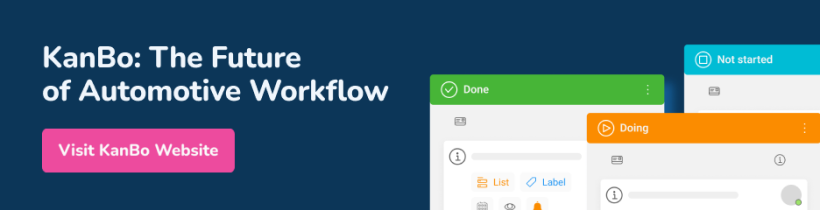
As a leader in innovation, you understand the importance of staying ahead of the curve in the fast-moving automotive 4.0 world. KanBo provides you with the tools to do just that by facilitating smart factory operations, streamlining project management, fostering collaboration and solving complex problems.
The Ultimate Guide to Cross Departmental Communication for Engine Design Engineers
It’s never been more important for large enterprises to have a comprehensive work coordination platform that facilitates seamless collaboration. KanBo is a solution that delivers on this need by offering a versatile and highly configurable work management tool that can be customized to meet the specific requirements of businesses across all industries.
For Engine Design Engineers, KanBo is an indispensable tool that streamlines project management, fosters collaboration, and solves complex problems within a highly competitive Automotive industry. By providing a centralized hub for communication and information sharing, KanBo enables cross-departmental teams to work together more effectively and efficiently.
One of the key features of KanBo is its flexibility, which allows it to be configured to fit the specific needs of any organization. Its intuitive user interface makes it easy for teams to collaborate, share data and track progress on projects in real-time. It supports both on-premises and cloud installations and licenses, making it an ideal solution for businesses of all sizes and geographies.
KanBo’s work coordination platform offers many benefits that add up to an improved work process, increased productivity, and better collaboration. Its powerful project management capabilities enable Engine Design Engineers to manage projects from start to finish, including scheduling, technical documentation, and reporting, cross-functional collaboration, design for manufacturing/assembly, CAD (3D parametric & fully dimensioned 2D), CAE, BOM management and cost calculation.
KanBo also offers a short product tour that showcases the platform’s core features, giving Engine Design Engineers a quick and easy way to get started. It’s perfect for businesses who need to hit the ground running and want a straightforward, easy-to-use solution.
Ultimately, KanBo is designed to improve cross-departmental communication, foster collaboration and increase productivity across all teams within large enterprises. Its powerful project management tools and flexible platform make it an ideal solution for businesses that need a work coordination platform that can be customized to their specific needs. If you want to learn more about KanBo, visit their website today and discover how it can transform the way your business works.
As an Engine Design Engineer in the Automotive Industry, you have a hectic schedule, with multiple projects running simultaneously. KanBo helps you to manage your tasks and streamline your project management, allowing you more time to focus on your project. Here’s a one week guide, outlining how you can use KanBo to manage your daily tasks in the automotive industry:
Monday: Start your week by creating a new workspace in KanBo dedicated to your current engine design project. Then, add all the necessary documents, drawings, and blueprints to the workspace. Divide the workspace into different spaces, like Concept design, Material selection, and Final design. Use cards to represent each task, and assign them to specific team members with deadlines.
Tuesday: On Tuesday, start visualizing your tasks by using the Kanban view. Update the status of each task as it progresses from one stage to the other. Use checklists to break down complex tasks into smaller ones and track progress more efficiently. Use the Timeline view to keep track of your project milestones and deadlines.
Wednesday: On Wednesday, dive deep into your document management system. With KanBo, you can store all important files in one central location. You can also collaborate on a document with your team members. Use the Document View to view and edit files without downloading them.
Thursday: On Thursday, use the Table View to create a Spreadsheet to monitor the timeline and progress of the project. Use sorting and filtering options to focus on specific data. You can also make bulk updates to tasks using Table view.
Friday: On Friday, take some time to analyze your team’s performance using the Dashboards & Reports feature. With the help of charts, calendars, and reports, you can track your team’s progress, identify bottlenecks, and make data-driven decisions.
By using KanBo, you can save time, improve collaboration, and increase productivity in the automotive industry. Try implementing these daily tips for a week and see the difference it can make to you and your team.

Yes, indeed, KanBo is much more than just a tool for cross-departmental communication. While communication and collaboration are a crucial aspect of KanBo, it is designed to be a holistic work coordination platform that addresses the many needs of large enterprises. Here are some of the other functions and features of KanBo:
1. Project Management: KanBo offers a range of project management functionalities like task tracking, timelines, Gantt charts, milestone tracking, resource allocation, and project prioritization. Project managers can use these features to streamline project workflows, delegate tasks, and ensure that projects are delivered on time and on budget.
2. Workflow Automation: With KanBo, you can create workflows that automate repetitive and manual tasks, allowing you to focus on more important work. For instance, you can set up automated approvals, notifications, and reminders, reducing the need for manual intervention.
3. Knowledge Management: KanBo makes it easy for you to store and share knowledge across your organization. You can create knowledge bases, wikis, and document libraries that are easily searchable and accessible to all members of your team.
4. Process Optimization: By analyzing your work processes and identifying bottlenecks and inefficiencies, KanBo helps you to optimize your workflows and increase productivity. With features like lean management, continuous improvement, and performance analytics, you can fine-tune your processes and drive better outcomes.
5. Agile Methodologies: KanBo supports agile methodologies like Scrum and Kanban, allowing you to manage complex projects with ease. With features like sprint planning, backlog management, and team retrospectives, you can stay on top of your agile projects and ensure that you’re delivering value to your stakeholders.
In summary, KanBo is much more than just a tool for cross-departmental communication. Its range of features and functionalities makes it a versatile and indispensable work coordination platform for large enterprises.
Q&A
1. Q: What benefits does KanBo offer to Engine Design Engineers in the automotive industry?
A: KanBo offers several benefits to Engine Design Engineers, including improved cross-departmental communication, effective collaboration, centralized data and information sharing, powerful project management tools, and flexibility to customize according to their needs.
2. Q: How does KanBo help Engine Design Engineers manage their projects?
A: KanBo provides Engine Design Engineers with a versatile and highly configurable work management tool that enables them to manage projects from start to finish. With features like scheduling, technical documentation, reporting, cross-functional collaboration, design for manufacturing/assembly, CAD, CAE, BOM management, and cost calculation, engineers can streamline their project management tasks.
3. Q: What kind of views and features does KanBo offer that benefit Engine Design Engineers?
A: KanBo offers several views and features that benefit Engine Design Engineers, such as Kanban view for visualizing tasks, Timeline view for tracking milestones and deadlines, Document view for centralizing all important files, Table view for sorting and filtering data, and Dashboards & Reports to analyze team performance with the help of charts, calendars, and reports.
Let’s take an example of an Engine Design Engineer in the automotive industry who is responsible for designing and developing engine parts comprising the unit engine and/or parts integrating the engine with the vehicle (intake/exhaust/cooling/fuel/wiring/engine control unit, etc.) using KanBo.
With KanBo, the Engine Design Engineer can easily manage their schedule, track progress on the project, and assign tasks to team members. They can collaborate with cross-functional teams like manufacturing, quality control, and procurement to ensure that the project stays on track.
Using KanBo’s CAD (3D parametric & fully dimensioned 2D) features, the Engineer can create 3D models and 2D drawings of the engine parts. They can also perform CAE (Computer-Aided Engineering) simulations to validate their designs and ensure that they meet the required specifications.
Furthermore, KanBo allows the Engineer to manage their parts list, establish and execute confirmation plans for carryover parts, and manage supplier-designed functional parts. They can use KanBo’s BOM (Bill of Materials) management and cost calculation features to ensure that the project stays within the budget.
Moreover, KanBo’s Personal and Shared Board View feature makes it easy for the Engineer to customize their view settings according to their specific preferences. They can use their Microsoft Office skills to filter and group cards, add and remove columns, collapse lists, and change the layout at the calendar or mind map view.
In conclusion, KanBo is an indispensable tool for Engine Design Engineers in the automotive industry. Its project management, collaboration, and CAD features make it easy to manage complex projects from start to finish. Its BOM management, cost calculations, and Personal and Shared Board View features make it a versatile and user-friendly platform. By using KanBo, Engine Design Engineers can save time, increase productivity, and work more efficiently.