Work coordination platform
Designed for the automotive industry
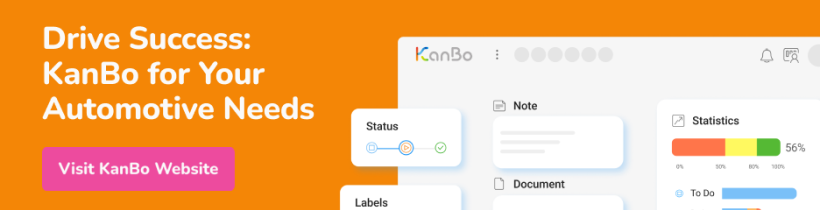
As a leader in innovation, you understand the importance of staying ahead of the curve in the fast-moving automotive 4.0 world. KanBo provides you with the tools to do just that by facilitating smart factory operations, streamlining project management, fostering collaboration and solving complex problems.
Revolutionize Workflow Management in Automotive: A Business Analyst 2’s Guide to Using KanBo
Introduction
In today’s fast-paced business world, collaboration and communication are key to success. Large enterprises often struggle to keep everyone in the loop, leading to inefficiencies and missed opportunities. That’s where KanBo comes in – a work coordination platform designed to connect teams, departments, and external stakeholders seamlessly. As a Business Analyst 2, you are always looking for solutions that can help streamline processes and enhance collaboration. This article will explore the features and benefits of KanBo and how it can enable cross-departmental communication in the automotive industry.
Feature Benefits
One of the key features of KanBo is its ability to integrate with other commonly used systems, such as SharePoint and Office 365. This means that there is no need to switch between different applications, reducing the risk of miscommunication and lost information. KanBo also provides real-time notifications and updates to keep everyone informed, eliminating the need for manual status updates.
Another feature of KanBo that sets it apart is its customizable user interface. This enables users to create their own boards, cards, and workflows to suit their specific needs. Each team or department can have their own customized board with tasks, deadlines, and progress reports. This also makes it easier to share information with external stakeholders such as suppliers and customers, enhancing collaboration and visibility across the entire supply chain.
KanBo also offers powerful data analytics and reporting features, giving administrators and business leaders a real-time overview of the organization’s performance. It enables data-driven decision making and prediction, allowing you to identify trends and bottlenecks quickly and make informed choices.
Cross-Departmental Communication in Automotive
In the automotive industry, effective communication and collaboration among different departments are critical for ensuring timely and efficient production. KanBo’s customizable boards, real-time updates, and data analytics provide a platform for cross-departmental communication that can enhance productivity and speed up the decision-making process.
For example, KanBo can be used to manage the procurement process from start to finish, with boards for request, approval, and delivery. The purchasing department can easily communicate with the supplier, ensuring that orders are fulfilled on time and according to specifications. Quality control and engineering teams can collaborate on design changes and track progress using KanBo, reducing the time required for iterations and ensuring the final production process is efficient as per requirements.
Short Product Tour
KanBo’s user interface is intuitive and easy to navigate. The homepage displays all the boards the user is a member of, with the ability to create new boards, cards and activities at one click. Each board can be accessed by simply clicking on its tile, providing a comprehensive perspective of the projects, tasks and progress reports.
KanBo also provides smart templates for various projects, reducing the time and effort required to create new boards. And if you have any queries or concerns, KanBo’s support team is always available to provide guidance and assistance.
Conclusion
KanBo is a comprehensive work coordination platform that can enhance productivity, communication and collaboration among teams and external stakeholders. Its customizable user interface, powerful data analytics and reporting features make it an ideal tool for large enterprises, including those in the automotive industry. As a Business Analyst 2, it’s worth considering KanBo for your organization’s workflow management and performance enhancement.
Introduction:
In this guide, we will take you through a week in the life of a Business Analyst 2 in the automotive industry using KanBo. We will show you how KanBo can streamline your work process, help you manage projects more effectively and collaborate seamlessly with others.
Monday:
On a typical Monday morning, you would log in to your KanBo dashboard and check your notifications. You might have received some messages from colleagues or notifications about new cards and updates. You then check your board’s progress and see which tasks are coming up for the week. With KanBo, you can easily prioritize tasks, assign cards, and schedule timeframes for your work.
Tuesday:
On Tuesday, you attend a meeting with your team to discuss a new project. You create a new card in KanBo and add all the relevant details, such as the project name, objectives, stakeholders, and budget. You then assign cards to different team members with deadlines. You can also set reminders for yourself and your colleagues using the notification feature.
Wednesday:
On Wednesday, you collaborate with your team on a card related to sales analytics. You use the card to jot down all the important points from the meeting. You also create a checklist of upcoming tasks, assign others to the checklist and set dates for completion.
Thursday:
On Thursday morning, you attend a training session with your team. You jot down important notes, attach the presentation, and add the video recording of the session to a KanBo card. You share the card with other team members, so they can get up to date details about the session. You also assign follow-up tasks to different team members.
Friday:
On Friday, you check your KanBo dashboard for updates on the project’s progress. You see that the team has completed most of the tasks assigned to them on time. However, there are a few cards that need attention. You use KanBo’s filtering option to sort uncompleted cards and decide to send reminders to the team to complete them. You follow up on the tasks assigned to you, update the cards, and mark as ready for review.
Conclusion:
KanBo is an excellent tool for project management in the automotive industry. It helps you to effectively manage tasks, prioritize workloads, collaborate with colleagues, store documents in one place, and streamline workflows. With KanBo, you can easily manage any project in the automotive industry with ease.

While KanBo is known for its ability to bring all teams, departments, and external stakeholders in large enterprises together, it is much more than just a tool for cross-departmental communication. KanBo offers a wide range of features that make it a comprehensive work management platform, designed to streamline all aspects of work coordination and project management.
With KanBo, users can create workspaces and spaces that are tailored to their specific needs and preferences. These workspaces can be customized with multiple document sources, documents, and document folders, to ensure that all relevant information is in one place.
KanBo also offers a range of card templates, allowing users to easily create cards for tasks, projects, and milestones. Users can assign people to these cards, schedule them, and add notes and checklists to ensure that everyone is on the same page.
In addition to these features, KanBo includes card relations, document references, and versioning, making it easy to keep track of all project-related information. The platform also includes a range of views, including kanban, table (spreadsheet), calendar, and Gantt chart, as well as dashboards and reports, ensuring that everyone has access to the data they need to make informed decisions.
KanBo is also great for resource management, allowing teams to easily manage their time and workload. With all the relevant information in one place, team members can work together with transparency and trust, making it easy to stay focused on what really matters, delivering quality work that will help the organization achieve its goals.
So don’t think of KanBo just as a tool for cross-departmental communication, think of it as a complete work management platform that can help your organization streamline its processes, manage resources, and achieve its goals with ease.
Q&A
Answer:
Some benefits of KanBo in the automotive industry include real-time notifications, customizable user interface, integration with other systems, data analytics and reporting features, and the ability to enhance communication and collaboration among departments and external stakeholders.
Answer:
KanBo can help streamline the procurement process in the automotive industry by providing customized boards for request, approval, and delivery. The purchasing department can communicate with suppliers and track progress, ensuring that orders are fulfilled on time and according to specifications. Quality control and engineering teams can collaborate on design changes, reducing the time required for iterations and ensuring efficient production.
Answer:
Yes, KanBo can be used for training sessions in the automotive industry. Notes from the session can be added to a KanBo card, and presentation videos or other relevant documents can be attached. The card can then be shared with other team members for easy access to up-to-date information on the training session. Follow-up tasks related to the training can also be assigned through KanBo.
Use Case: Managing Purchasing and Supplier Operations in the Automotive Industry using KanBo
Let’s consider an example of a large automotive manufacturer that needs to manage its purchasing and supplier operations efficiently. With KanBo’s customizable boards, the company can create a workspace specifically for the procurement process with cards for requests, approvals, and deliveries.
The product owner can work closely with the business teams to define the scope and requirements of the project. They can perform systems and business analysis, documenting business requirements, processes, and technical specifications. With KanBo’s tools such as Jira, Clarity, and PowerPoint, the product owner can create dashboards to report on the project’s progress regularly.
The product owner can use KanBo to organize the product team, prioritize work, and allocate it to appropriate team members with a collaborative approach. KanBo allows the team to prioritize its backlog and plan sprint executions using Agile methodologies, ensuring rapid time-to-market.
KanBo’s collaboration features make it easy for the product owner to communicate with the team, conduct brainstorming meetings, and perform sprint retrospectives. The product owner can use KanBo to monitor SLAs, track delivery status, and report on risk management and resource planning.
KanBo’s user-friendly interface allows team members to use their Microsoft Office skills to manage cards, attach and share files, and collaborate with team members seamlessly. The system’s card relations, document references, and versioning features make it easier to keep track of all project-related information.
The product owner can also use KanBo as a subject matter expert (SME) to provide ongoing support to supply chain projects. KanBo’s workflows and customizable boards enable the product owner to mentor junior associates and develop innovative solutions to capture supplier quality metrics.
Conclusion
Overall, KanBo is a powerful tool for managing purchasing and supplier operations in the automotive industry. Its customizable boards, data analytics and reporting features, and collaboration tools make it easier for product owners and teams to work together effectively. With KanBo, businesses can streamline their procurement process, enhance communication with suppliers, and deliver quality products in a timely manner.