Work coordination platform
Designed for the automotive industry
As a leader in innovation, you understand the importance of staying ahead of the curve in the fast-moving automotive 4.0 world. KanBo provides you with the tools to do just that by facilitating smart factory operations, streamlining project management, fostering collaboration and solving complex problems.
Maximizing Efficiency and Compliance in the Automotive Industry with KanBo’s System Responsibility Exterior Light Feature
Introduction:
KanBo is a work coordination platform designed for large enterprises that provides a complete solution to streamline communication, collaboration, task management, and project planning. It is a powerful tool that assists businesses in achieving timely and efficient results, while boosting teamwork and productivity across all departments.
System Responsibility Exterior Light:
For the automotive industry, KanBo offers a complete package with the System Responsibility Exterior Light feature. This feature is designed to cater to the needs and preferences of large enterprises with complex and networked E/E hardware components, ensuring that they are developed in accordance with uniform processes and standards, while meeting the group’s quality and cost targets. KanBo’s System Responsibility Exterior Light feature enables you to control the variance across the vehicle portfolio and coordinate the appropriate electrical and mechanical architecture in the vehicle projects, while ensuring that all legal regulations are met.
Feature Benefits:
KanBo’s System Responsibility Exterior Light feature benefits businesses in the automotive industry in several ways. It enables them to achieve quicker time-to-market, while reducing project durations, thus reducing the overall production costs. Moreover, it ensures that all complex and networked E/E hardware components are developed in accordance with uniform processes and standards, thereby reducing the risk of error and increasing compliance. This strengthens the position of businesses in the commercial vehicle sector and enables them to expand their market share.
Short Product Tour:
KanBo’s intuitive interface and customizable dashboards enable businesses to tailor the software to their specific needs. Users can collaborate across departments and externally, providing a complete picture of the project status. The platform allows users to create workflows that suit their needs, as well as providing powerful analysis and reporting tools. KanBo’s System Responsibility Exterior Light feature enables businesses to achieve greater collaboration and faster time-to-market, thus enabling them to gain a competitive edge.
Cross-Departmental Communication in Automotive:
KanBo’s System Responsibility Exterior Light feature provides businesses with a robust solution to orchestrate cross-departmental communication in Automotive. This ensures that businesses are able to respond quickly to their customers’ demands, while providing transparency, agility, and efficiency in their operations. The platform provides a comprehensive project overview that extends to all departments, which helps to align objectives and mitigate any potential communication gaps.
Conclusion:
In conclusion, KanBo is a work coordination platform designed for large enterprises that provides a complete solution to streamline communication, collaboration, task management, and project planning. Its System Responsibility Exterior Light feature is tailored to the needs of the automotive industry, enabling businesses to achieve greater collaboration and faster time-to-market while ensuring compliance. With KanBo, businesses can take advantage of cross-departmental communication to attain their goals efficiently, effectively, and competitively.
One Week of Life: System Responsibility Exterior Light in Automotive Industry with KanBo
Monday:
On Monday, the team responsible for the exterior lighting system in the automotive industry starts their week by logging into KanBo and checking their board. They begin by reviewing their Kanban view and identifying the tasks that are due this week. They update any information they need to on their cards and adjust priorities as necessary. They also take a look at the MyBoard feature and ensure that their personal workload for the week is organized and up to date.
Tuesday:
On Tuesday, the team begins working on their assigned cards. The KanBo platform makes it easy to collaborate with other team members. They use the @mentions feature to tag their colleagues on specific cards, giving them quick updates on any progress or roadblocks. They also make use of the chat feature to discuss any issues or ideas they may have. Throughout the day they move cards through the Kanban view, tracking progress as they go.
Wednesday:
On Wednesday, the team shifts their focus towards the timeline view in KanBo. They use this view to get a better understanding of their priorities and deadlines for the week. They identify any tasks that need to be completed before the end of the week and adjust their cards accordingly. They also take this opportunity to review their board’s analytics, which provides them with valuable data on their workflow and can help identify areas where they can improve.
Thursday:
On Thursday, the team shifts their attention to their documents. KanBo enables them to easily share files and collaborate on documents from multiple sources in their spaces. They use this feature to share notes and documents relevant to their assigned tasks. They update any necessary files and ensure that everyone has access to the latest versions of these documents. This keeps everyone on the same page and prevents any confusion.
Friday:
On Friday, the team takes a step back and reviews the week’s progress. They use the Gantt chart feature to map out the status of their projects and ensure they are on track to meet their deadlines. They update any information they need to on their cards and adjust priorities as necessary. Finally, they use KanBo’s reporting feature to create a summary report of the week’s progress to share with their management team.
In conclusion, using KanBo in the automotive industry provides teams with a powerful and flexible tool to coordinate their work, streamline their processes, and foster communication and collaboration with their colleagues. By following this one week guide for the system responsibility exterior light, teams can stay organized and easily adapt to changing priorities, ultimately increasing their efficiency and productivity.
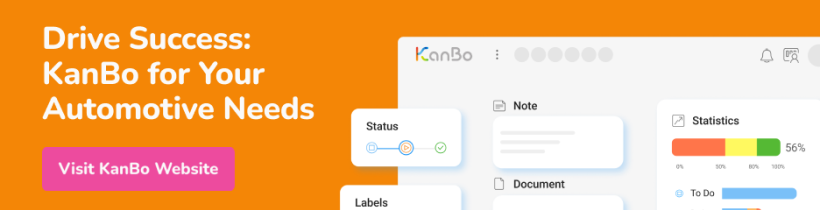
Yes, KanBo is much more than just a tool for cross-departmental communication. While it does excel at facilitating communication between teams, it also provides a comprehensive work management system that streamlines collaboration and improves productivity across the organization.
With KanBo, you can assign tasks, set deadlines, track progress and monitor performance to ensure that projects stay on track and are completed on time. Its customizable card elements and templates allow you to create and manage different types of information in multiple formats, such as checklists, documents, comments, and more.
Moreover, KanBo offers various views, including Kanban, List, Table, Calendar, Gantt, Timeline, and Mind Map, which help you visualize and manage your work based on your preference and needs. Its dashboards and reports provide real-time insights into the progress and performance of your team and the entire organization.
KanBo also integrates with various popular platforms, such as Microsoft Teams, Outlook, SharePoint, and Salesforce, to ensure that you can work with the tools you already use and save time and effort in switching between them.
In summary, KanBo is much more than a communication tool. It’s a comprehensive work management platform that enables you to collaborate, coordinate, and deliver purposeful work more efficiently and effectively.
Q&A
1. Q: How does KanBo’s System Responsibility Exterior Light feature benefit businesses in the automotive industry?
A: KanBo’s System Responsibility Exterior Light feature enables businesses in the automotive industry to achieve quicker time-to-market, reduce project durations and reduce overall production costs. It also ensures that all complex and networked E/E hardware components are developed in accordance with uniform processes and standards, thus reducing the risk of error and increasing compliance, strengthening the position of businesses in the commercial vehicle sector and enabling them to expand their market share.
2. Q: How does KanBo’s platform assist cross-departmental communication in the automotive industry?
A: KanBo’s platform provides businesses in the automotive industry with a robust solution to orchestrate cross-departmental communication. This ensures that businesses are able to respond quickly to their customers’ demands, while providing transparency, agility, and efficiency in their operations. The platform provides a comprehensive project overview that extends to all departments, which helps to align objectives and mitigate any potential communication gaps.
3. Q: How does KanBo’s reporting feature help in summarizing the week’s progress?
A: KanBo’s reporting feature helps in summarizing the week’s progress by enabling users to create a summary report of the week’s progress that can be shared with the management team. This report highlights the tasks that have been completed, the tasks that are in progress, and the tasks that are yet to be started, giving management a quick and concise overview of the team’s progress. The reporting feature helps to ensure that everyone is on the same page and enables quick decision-making.
Use Case: Managing System Responsibility for Exterior Lighting in the Automotive Industry with KanBo
Imagine you are an electrical engineer working in the automotive sector, and you have been assigned the responsibility for the exterior lighting system development in your organization. You will be working in the TRATON network, alongside an international development team that is using and expanding kits for exterior lighting. Your task is to bring these kits into series production across all model series while ensuring compliance with legal regulations.
This work is complex, and you need to coordinate with other departments like function development, validation, homologation, design, procurement, suppliers, and other commercial vehicle brands in the TRATON GROUP and the Volkswagen Group. You are the interface between these departments, and you need to provide regular reports on the maturity of the system in vehicle projects.
To manage this complex project, you can use KanBo’s System Responsibility Exterior Light feature. You can create a board for the exterior lighting project and divide the tasks into cards. Each card can represent a specific task, and you can use available card elements to describe them and categorize them.
For example, you can create cards for specification requirements, design of electrical/electronic systems, circuitry, function monitoring, mounting dimensions, and compliance with legal regulations. You can also assign each card to different team members and use mentions in comments and board chat to communicate with them.
You can use board views to visualize work stages, and Kanban view is a basic way to organize tasks. It helps group tasks based on predetermined criteria like priority, status, and responsible person. However, KanBo offers several other views like List, Table, Calendar, Gantt, Timeline, and Mind Map. These views can help you manage tasks based on personal preferences and various departments’ working styles.
KanBo also integrates with Microsoft Office, allowing users to use their Office skills with KanBo boards. For example, you can attach Office documents to cards, work on them with your team, and update them in real-time. Additionally, you can use KanBo to create workflows that suit your needs and provide powerful analysis and reporting tools.
Conclusion:
KanBo’s System Responsibility Exterior Light feature offers businesses in the automotive industry a powerful solution for managing complex projects while ensuring compliance with legal regulations. With KanBo, teams can collaborate more efficiently, streamline communication, and deliver projects faster. By using KanBo’s customizable dashboards, card elements and templates, board views, and integration with Microsoft Office, users can tailor the software to meet their specific needs and preferences. Anyone in the role of developing electronic systems in the automotive sector with a good eye for coherences and essentials could take the lead in managing the System Responsibility Exterior Light feature with KanBo.
