Work coordination platform
Designed for the automotive industry
As a leader in innovation, you understand the importance of staying ahead of the curve in the fast-moving automotive 4.0 world. KanBo provides you with the tools to do just that by facilitating smart factory operations, streamlining project management, fostering collaboration and solving complex problems.
Boosting Collaboration and Efficiency: How KanBo Supports Safety Engineers in Corporate Safety & Ergonomics Departments in the Automotive Industry
Introduction:
In today’s fast-paced and highly competitive business world, enterprises need to constantly innovate to stay ahead of the pack. Achieving this requires seamless communication and collaboration among different teams, departments and external stakeholders. Enter KanBo – a work coordination platform that is designed specifically for large enterprises.
Features and Benefits:
KanBo offers a wide range of features that help enterprises stay ahead of the curve. From streamlining project management to fostering cross-departmental communication, KanBo has it all. Here are some of the key features and benefits of this platform:
1. Cloud and On-Premises Installations: KanBo offers both cloud and on-premises installations, giving enterprises the flexibility to choose what works best for them.
2. Customizable Licenses: KanBo offers customizable licenses that cater to the needs and preferences of every type of business.
3. Smart Factory Operations: KanBo’s advanced features allow enterprises to streamline their factory operations by automating routine tasks and optimizing workflows.
4. Collaboration: KanBo’s collaboration tools enable cross-functional teams to work seamlessly together, sharing information and ideas in real-time.
5. Project Management: KanBo offers project management tools that enable enterprises to plan, execute, and deliver projects on time and on budget.
Short Product Tour:
KanBo’s user interface is intuitive and easy to use. Let’s take a brief tour of some of KanBo’s key features:
1. Boards: KanBo’s boards are the heart of the platform. Think of them as virtual whiteboards that you can use to organize and prioritize your work.
2. Cards: Each board is made up of cards that represent tasks, ideas or projects. Users can customize cards with information such as due dates, attachments, checklists and comments.
3. Swimlanes: Swimlanes are a visual way to organize cards on a board. They provide a high-level overview of different departments, workflows or project stages.
Cross-Departmental Communication in Automotive:
In the automotive industry, cross-departmental communication is crucial to success. KanBo allows different departments to collaborate and communicate in real-time, creating a unified approach that increases efficiency and productivity. Safety Engineers in Corporate Safety & Ergonomics departments can work together with product development teams to ensure that safety standards are met in new vehicle designs. Additionally, KanBo’s communication tools allow Safety Engineers to communicate with other stakeholders such as suppliers and regulators.
Conclusion:
In conclusion, KanBo is a powerful work coordination platform designed for large enterprises. Its advanced features, customizable licenses, and on-premises and cloud installations make it the ideal platform for businesses looking to stay ahead of the competition. For Safety Engineers in Corporate Safety & Ergonomics departments in the Automotive industry, KanBo provides a unique platform to foster cross-departmental communication and facilitate smart factory operations.
Monday:
As a Life Safety Engineer in Corporate Safety & Ergonomics in the Automotive industry, start your day by reviewing the safety audit report from last week. Analyze the findings and assign necessary corrective actions to the responsible team members by creating cards on KanBo. Use card relations to link the corrective action cards back to the audit report. Discuss the corrective actions with your team during the daily stand-up meeting and update the status of the cards accordingly.
Tuesday:
Use KanBo to conduct a job safety analysis for a new manufacturing process. Create a board for the process and add cards for each task. Assign team members to the cards and use the checklist feature to ensure that all safety aspects are covered. Use the Kanban view to track progress and conduct a peer review of the analysis.
Wednesday:
Create a KanBo template for conducting safety inspections of the manufacturing plant. Use the template to create inspection boards for different areas of the plant. During the inspections, use KanBo to take photos of safety hazards and attach them to corresponding cards. Assign corrective actions to the responsible team members and set deadlines.
Thursday:
As part of your ergonomics program, conduct a risk assessment of workstations in the production line. Create cards for each workstation and assign team members to them. Use KanBo’s Gantt chart view to create a timeline for the assessment process and set milestones for completion. Share your progress with other stakeholders in the company using KanBo’s reporting features.
Friday:
Use KanBo to create a dashboard for the safety and ergonomics program. Use the card status feature to track progress on corrective actions, job safety analyses, safety inspections, and risk assessments. Use the report feature to generate a report for senior management. Use the board chat feature to communicate with team members throughout the day. Celebrate the week’s accomplishments during the weekly team meeting.
Yes, KanBo is much more than a tool for cross-departmental communication. While its strength lies in bringing teams and stakeholders together, KanBo offers a range of features and capabilities that go beyond communication.
For instance, KanBo’s workspaces allow teams to organize and manage their work in a structured and efficient manner. With KanBo, team members can assign tasks, schedule deadlines, track progress, set priorities, and collaborate seamlessly in real-time.
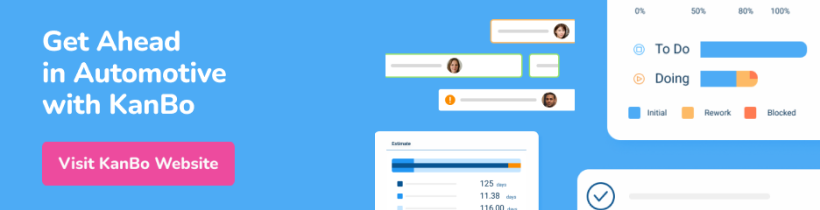
KanBo also offers a range of views such as Kanban, list, table, calendar, and timeline, that allow stakeholders to visualize their work and make data-driven decisions. Additionally, KanBo’s card templates, card grouping, and card statuses features enable team members to reuse successful strategies and easily track their progress.
KanBo’s document management features such as document versioning, references, and folders, make it easy to manage and share files securely. Resources can be managed effectively with KanBo’s resource management feature, which enables stakeholders to allocate and track their resources for different projects and tasks.
KanBo’s board analytics help stakeholders monitor their workflow, track bottlenecks and identify areas where they can improve their efficiency and effectiveness.
Overall, KanBo provides a comprehensive work management solution for large enterprises and empowers teams to work effectively, improve collaboration, and achieve their goals.
Q&A
Q1. What types of licenses does KanBo offer?
A1. KanBo offers customizable licenses that cater to the needs and preferences of every type of business. Businesses can choose between cloud and on-premises installations, and customize their licenses to fit their specific requirements.
Q2. How does KanBo facilitate cross-departmental communication in the automotive industry?
A2. KanBo allows different departments in the automotive industry to collaborate and communicate in real-time, creating a unified approach that increases efficiency and productivity. Safety Engineers in Corporate Safety & Ergonomics departments can work together with product development teams to ensure that safety standards are met in new vehicle designs. Additionally, KanBo’s communication tools allow Safety Engineers to communicate with other stakeholders such as suppliers and regulators.
Q3. What tools does KanBo offer for project management?
A3. KanBo offers a variety of project management tools to help businesses plan, execute, and deliver projects on time and on budget. Users can create boards and cards to organize tasks, ideas or projects. They can customize cards with information such as due dates, attachments, checklists and comments. Users can also use swimlanes to organize cards on a board and provide a high-level overview of different departments, workflows or project stages.
Now, let’s consider a use case for a safety engineer in the automotive industry using KanBo boards. Imagine that a Safety Engineer at Daimler Truck AG is tasked with implementing a new safety initiative in their manufacturing plants worldwide. They can use KanBo boards to manage the project from start to finish.
First, the Safety Engineer creates a new board for the safety initiative and adds a list of tasks required for completion. They then create cards for each task, such as “Research latest safety standards,” “Collaborate with cross-functional teams,” and “Develop safety protocols for new processes.”
The Safety Engineer can also customize each card by adding due dates, attachments, and comments. Using KanBo’s swimlane feature, they group these cards according to different stages of the project such as “planning stage,” “execution stage,” and “approval stage.”
As the project progresses, team members can be assigned to specific cards, and the Safety Engineer can use mentions in the comments section to communicate with them. The Safety Engineer can also use KanBo’s board analytics to monitor progress, track bottlenecks, and identify areas for improvement.
Furthermore, as the Safety Engineer collaborates with cross-functional teams, they can use KanBo to create boards for each team, adding relevant members and assigning tasks to each team. They can then link these boards with the main safety initiative board, allowing seamless communication and collaboration between teams.
Lastly, the Safety Engineer can use Microsoft Office skills with KanBo boards by attaching Word documents, Excel spreadsheets, and PowerPoint presentations to cards. This allows them to share and update documents in real-time, enhancing communication and collaboration among team members.
In conclusion, KanBo’s versatile and user-friendly digital platform allows Safety Engineers in the automotive industry to manage complex projects such as implementing safety initiatives with ease. With its customization options, collaboration tools, and Microsoft Office integration, KanBo provides a comprehensive solution for managing projects and tasks across different departments and teams.